
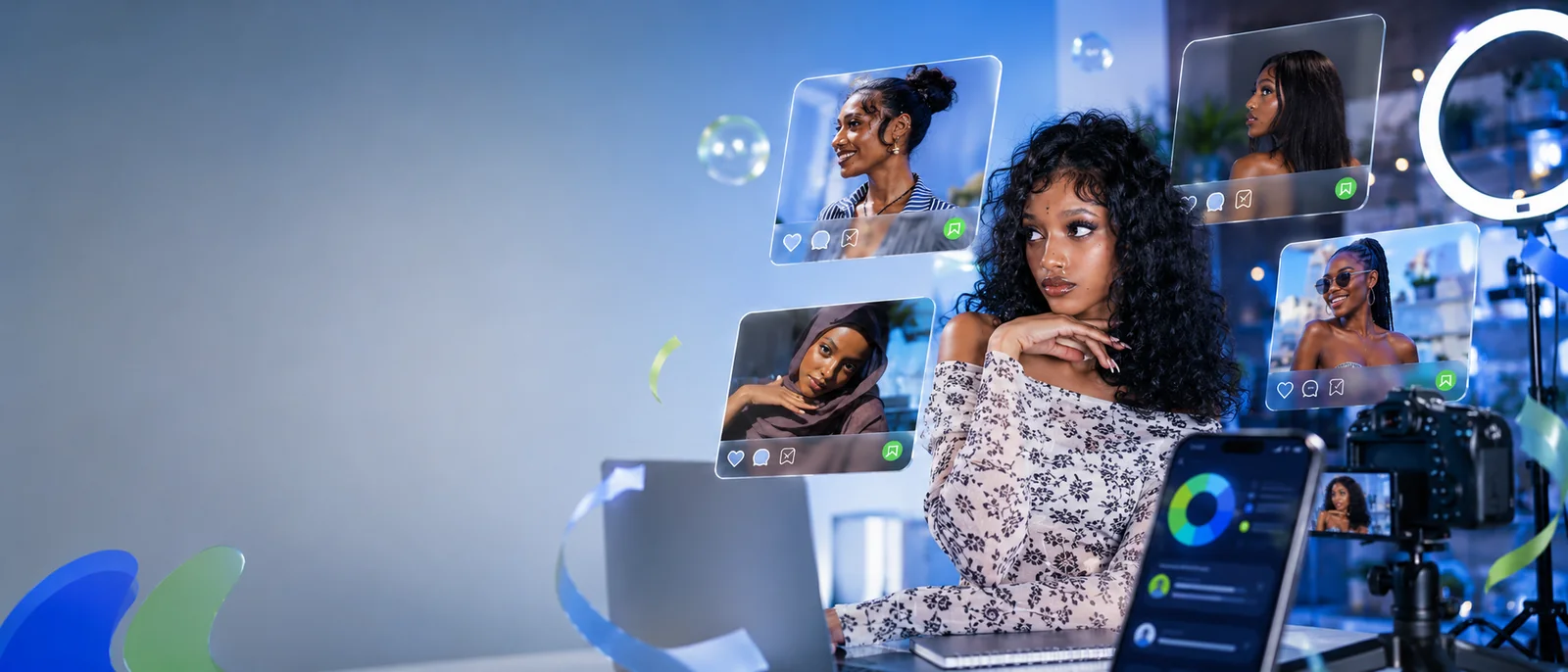
Beauty and wellness content is personal. Viewers are evaluating a product, but they are also evaluating the creator’s routine, skin, body, confidence, taste, and honesty. Campaigns perform better when the brand protects that trust instead of replacing it with exaggerated promises.
Build a trust sequence instead of a product mention
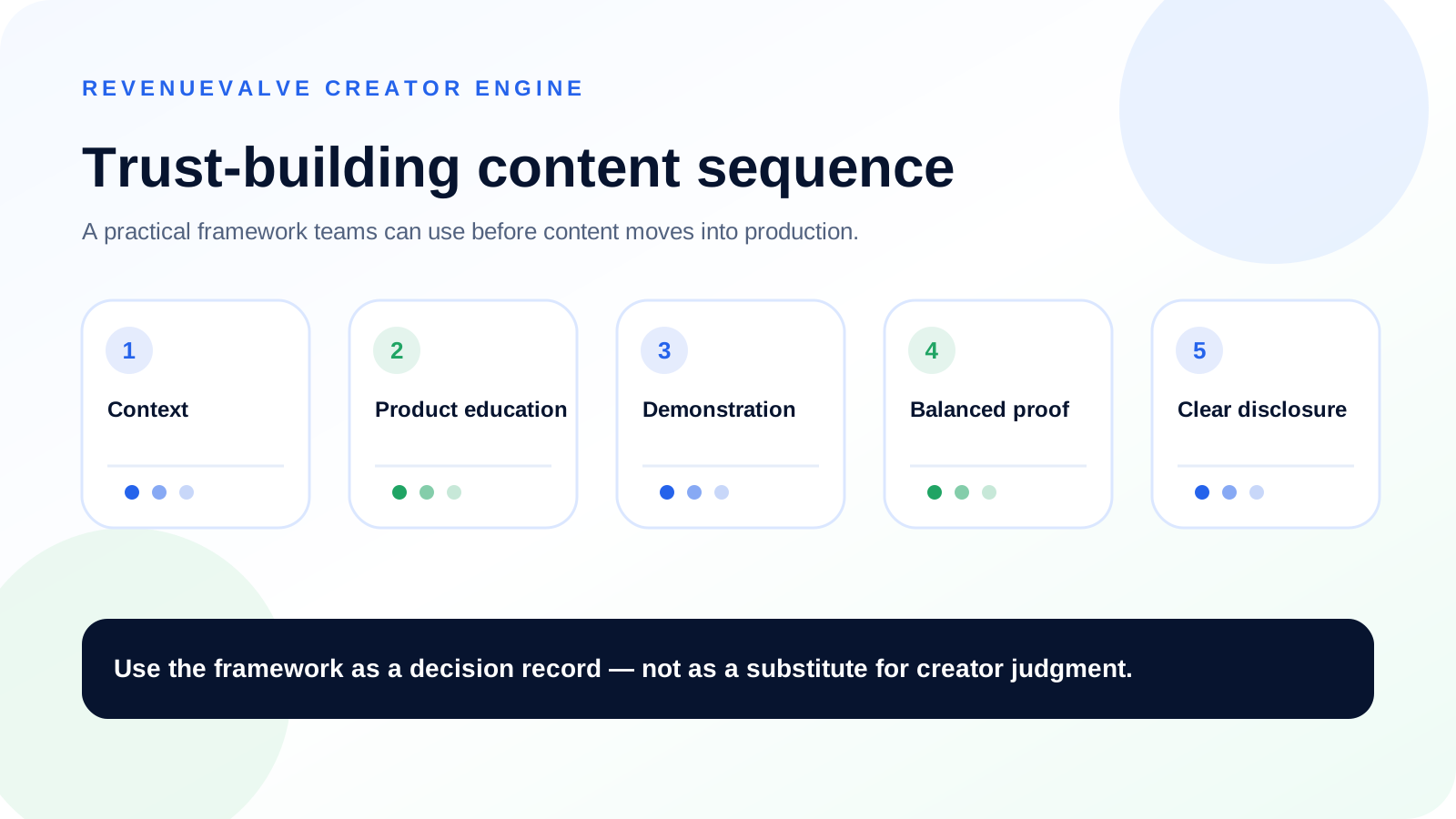
A persuasive beauty or wellness video usually moves through a sequence. It begins with a recognizable context, explains why the product is relevant, demonstrates use, offers balanced proof, and makes the commercial relationship clear. The creator does not need to follow a rigid formula, but the viewer needs enough information to understand what happened.
Context
Show the real routine or problem. “My makeup separates around noon when I skip skin preparation” is more specific than “You need this product.” Context lets the audience decide whether the experience applies to them.
Education
Explain the product’s function in plain language. Ingredient lists and technical features are useful only when they are connected to a real decision. Brands should provide accurate product information and identify which claims have been approved.
Demonstration
Viewers want to see texture, application, fit, packaging, timing, cleanup, and how the product interacts with other items. A strong demonstration reduces uncertainty. It also creates more visual moments for paid-media edits.
Balanced proof
Personal experience can be compelling, but it should not become a universal promise. Show what the creator observed, the conditions of the test, and the time period when relevant. Avoid visual tricks that create a result the product did not produce.
Disclosure
Paid relationships, free products, affiliate commissions, and other material connections should be disclosed clearly. The FTC advises that viewers should be able to notice and understand the disclosure. Hiding it among hashtags or placing it where viewers are unlikely to see it creates avoidable risk.
Handle beauty and wellness claims with discipline
Claims can be explicit or implied. A creator does not need to say “this treats a condition” to communicate that idea. The visual sequence, before-and-after presentation, captions, and surrounding language can create an implied claim.
Separate claim types inside the brief:
- Product facts: size, ingredients, materials, use instructions, price, availability
- Sensory observations: texture, scent, finish, feel, packaging experience
- Personal experience: what the creator noticed under stated conditions
- Objective performance claims: outcomes that require evidence
- Health or safety claims: statements that require particularly careful review
The FTC’s health-products guidance emphasizes that advertising must be truthful, not misleading, and supported for objective claims. Brand teams should not ask creators to “make the claim sound natural” when the evidence question has not been resolved.
How to create demonstrations people can evaluate
Use consistent conditions
When showing wear, texture, coverage, or a routine result, keep lighting and camera settings as consistent as practical. Disclose meaningful changes in environment, makeup, styling, or editing. The goal is clarity, not laboratory perfection.
Show the amount and timing
Audiences frequently ask how much product was used and how long a process took. Capture those details. They improve usefulness and reduce repetitive questions in comments.
Include the unglamorous steps
Cleanup, drying time, charging, storage, residue, fit adjustments, and product compatibility can matter as much as the hero shot. Honest friction can increase trust because the content helps viewers make a decision rather than presenting a flawless fantasy.
Create modular footage
Capture product close-ups, application, reaction, routine context, proof, and calls to action as separate clips. Modular footage gives the brand more options for organic posts, cutdowns, paid testing, and future revisions—provided the usage agreement covers those uses.
Plan inclusive content without tokenism
Beauty and wellness products can perform differently across skin tones, hair textures, body types, ages, routines, climates, and accessibility needs. A diverse creator mix should be connected to real product relevance, not assembled as a visual checklist.
Ask whether the product, shade range, instructions, and claims support the audience being featured. Creators should be able to raise concerns before production. If a product is not appropriate for someone’s needs, changing the creator may be more honest than forcing the assignment.
Meta’s advertising policies include specific restrictions for some health, wellness, weight-loss, and cosmetic messaging, including content that exploits negative self-perception. Even when content is posted organically, brands should avoid creative that depends on shame, humiliation, or unrealistic body standards.
Sponsored content should still sound like the creator
Give creators approved facts and a clear assignment, then let them choose the language that fits their normal communication. Review their recent product education, not only their most polished beauty shots. The audience often trusts the small habits: how the creator explains a texture, answers a comment, or admits that a product is better for one situation than another.
Avoid requiring every positive adjective in one post. A video that says a product is “life-changing, clean, luxurious, powerful, gentle, revolutionary, and perfect” communicates less than a specific demonstration.
Measure the signals that match the content job
| Content job | Useful signals |
|---|---|
| Product education | Watch time, completion, saves, detailed comments |
| Routine inspiration | Shares, saves, profile visits, repeat viewers |
| Launch awareness | Qualified reach, frequency, branded search, landing-page visits |
| Paid conversion | Thumb-stop rate, hold rate, CTR, conversion rate, CPA |
| Community trust | Question quality, sentiment, creator response, return comments |
Track performance by concept and hook, not only by creator. A creator may have one excellent demonstration format and one weak scripted format. That distinction helps the next brief improve.
A 30-day beauty or wellness creator program
- Days 1–5: Review product evidence, audience, claims, creator fit, and required disclosures.
- Days 6–10: Approve concepts that cover education, routine, objection handling, and demonstration.
- Days 11–18: Produce modular footage with consistent conditions and clear product visibility.
- Days 19–22: Complete consolidated brand and compliance review.
- Days 23–27: Publish organic content and launch controlled paid tests where licensed.
- Days 28–30: Review audience questions, creative performance, and renewal opportunities.
Trust is not a soft objective. It affects whether people watch, believe, save, ask, click, and buy. Beauty and wellness teams earn that trust through accurate product information, creators who belong in the conversation, transparent relationships, and content that helps viewers make informed choices.
Sources and further reading
- FTC: Health Products Compliance Guidance
- FTC: Disclosures 101
- Meta Advertising Standards: Health and Wellness
- TikTok: Commercial content disclosure
This article is general marketing guidance and does not replace legal, regulatory, or scientific review.