

A creator can have strong reach and still be the wrong person for a campaign. The most useful selection process looks beyond follower count and asks a harder set of questions: Can this person explain the offer clearly? Does their audience trust them in this category? Can the content survive paid distribution? Will the creator deliver clean files, revisions, disclosures, and usage approvals on schedule?
Start with the business outcome, not a creator category
Teams often begin by searching for “beauty creators,” “fitness influencers,” or “local lifestyle talent.” That is a useful first filter, but it is not a campaign objective. A launch that needs paid social assets has different requirements from a seeding program, a retail event, an affiliate push, or a founder-led awareness campaign.
Write one decision sentence before reviewing talent: We need creators who can help this audience understand this offer and take this action in this channel. The sentence forces the team to identify the buyer, the message, the desired behavior, and the distribution plan. It also makes it easier to reject impressive profiles that do not fit the job.
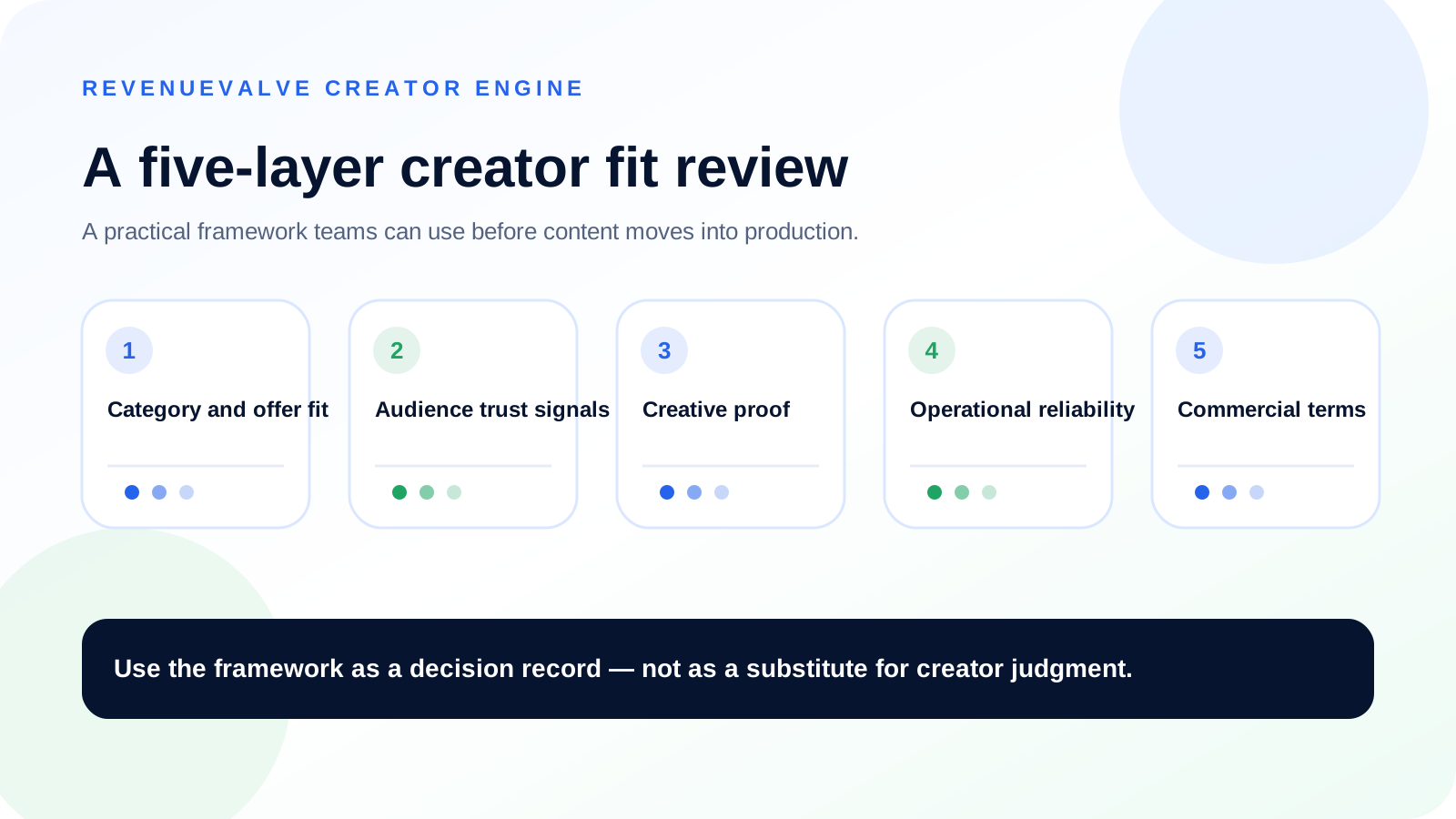
The five-layer creator fit review
1. Category and offer fit
Category fit is more specific than a niche label. Review whether the creator has already discussed similar problems, routines, products, or buying decisions. A wellness creator who mainly posts motivational quotes may not be the right fit for a detailed supplement demonstration. A food creator who regularly explains ingredients and preparation may be excellent for a product that needs education.
Look for vocabulary, visual habits, and audience questions that naturally connect to the offer. The strongest partnerships usually extend an existing conversation instead of forcing the creator into an unfamiliar role.
2. Audience trust signals
Follower count is a distribution estimate, not proof of trust. Read comments. Are people asking follow-up questions, sharing personal context, tagging friends, and returning across posts? Does the creator answer responsibly? Are comments connected to the actual content, or are they generic reactions that could appear anywhere?
Audience quality should also be reviewed across time. A single viral post can inflate averages. Compare typical posts, recent posts, sponsored posts, and content in the target category. When data is available, review reach, watch time, saves, shares, profile visits, link activity, and repeat viewers rather than relying on one engagement-rate percentage.
3. Creative proof
Review the creator as a producer. Can they open quickly? Is the product visible early enough? Does the voiceover sound natural? Can they hold attention without relying on a trending sound? Are demonstrations easy to follow? Does the creator know how to show proof instead of only describing benefits?
For paid use, inspect technical consistency: framing, lighting, focus, room tone, captions, safe text placement, and whether raw footage can be repurposed. A creator who understands variations—different hooks, calls to action, lengths, and aspect ratios—can create more testable value from the same production day.
4. Operational reliability
Campaign performance can be damaged before the content is published. Confirm response time, revision process, equipment access, travel limitations, product delivery address, availability, and whether the creator can work inside a documented approval flow. A managed roster adds value here because the brand has an accountable party coordinating schedules, contracts, files, and feedback.
Ask for a realistic turnaround rather than an artificially fast promise. A creator who communicates a conflict early is safer than one who agrees to every deadline and misses production.
5. Commercial fit
Commercial fit covers more than the creation fee. It includes usage term, paid-media rights, platform placement, editing rights, raw footage, exclusivity, whitelisting or partnership-ad access, revision limits, travel, props, and renewal terms. Compare creators using the same scope. A lower creation fee may become more expensive once the full rights package is added.
How to audit a creator’s recent content
Use a repeatable audit instead of scrolling until someone feels right. Review at least twenty recent posts and record what you see. The goal is to understand the creator’s normal standard, not their best pinned example.
- Opening: What happens in the first two seconds? Is the value clear?
- Structure: Does the post have a beginning, development, and payoff?
- Proof: Are claims supported through demonstration, experience, or clear context?
- Audience response: What questions and objections appear in comments?
- Sponsored work: Does branded content still sound like the creator?
- Consistency: Can the quality be repeated without an unusual location or production team?
- Safety: Are there unresolved claims, hostile exchanges, or content conflicts that matter to the brand?
FTC guidance requires material relationships to be disclosed clearly, including free products and other incentives. During an audit, check whether the creator uses disclosures in a way viewers can actually notice. Platform labels are useful, but a campaign team should still confirm the creator understands the brand’s disclosure instructions.
Build a scorecard that supports judgment
A scorecard should organize discussion, not pretend that creator selection can be fully automated. Use five to eight criteria, score each one on the same scale, and require a short written reason. Written notes expose assumptions that a number can hide.
| Area | Suggested weight | Evidence |
|---|---|---|
| Offer and audience fit | 25% | Past topics, comments, audience questions |
| Creative quality | 25% | Hooks, clarity, proof, production consistency |
| Performance pattern | 20% | Typical reach, retention, shares, saves, clicks |
| Brand safety | 15% | Content history, claims, disclosure habits |
| Operations | 15% | Communication, turnaround, file delivery, revisions |
Do not combine every platform into one audience total and call it reach. Audiences overlap, metrics are counted differently, and a creator’s strongest platform may be the one most relevant to the campaign. Keep the platform context visible.
Run a controlled pilot before scaling
A pilot should answer a specific question. For example: Can this creator produce direct-response demonstrations that hold attention for the first six seconds? Give two or three creators the same core objective while allowing each person to use their own language. Ask for a small set of variations, then compare both production quality and performance.
A practical pilot may include three concepts, two hooks per concept, one revision round, raw footage, and a defined organic-use period. If the brand plans to advertise the content, paid-media rights should be agreed before production. The test should also capture operational notes: communication quality, revision accuracy, file organization, and the creator’s ability to interpret feedback.
Selection mistakes that create expensive campaigns
- Choosing by follower count alone. Reach can be useful, but it cannot replace content fit or audience trust.
- Using one engagement-rate formula for every platform. Views, reach, followers, and interactions are counted differently.
- Ignoring sponsored-post quality. Organic personality does not automatically translate into strong brand communication.
- Leaving rights until the end. The team may create a winning asset it cannot legally run long enough to learn from.
- Overwriting the creator’s voice. A script that sounds like corporate copy usually loses the credibility the brand hired.
- Skipping operational review. Missed approvals and missing files can erase the value of good creative.
A practical selection process for a small team
Week one: clarify the objective, audience, offer, channels, budget, and rights. Week two: build a longlist and complete the content audit. Week three: interview the strongest candidates, review rates and availability, and select the pilot group. Week four: launch a controlled production sprint and document results. The process is simple enough to repeat and detailed enough to prevent the most common mistakes.
RevenueValve Creator Engine uses this kind of structured review to help brands choose from managed talent based on campaign fit rather than price shopping. The creator still brings the judgment and personality. The system makes the decision easier to explain, execute, and improve.
Sources and further reading
- FTC: Disclosures 101 for Social Media Influencers
- FTC: Advertisement Endorsements
- YouTube: Get started with YouTube Analytics
- TikTok: Promoting a brand, product, or service
This article provides general campaign-planning information and is not legal advice.