
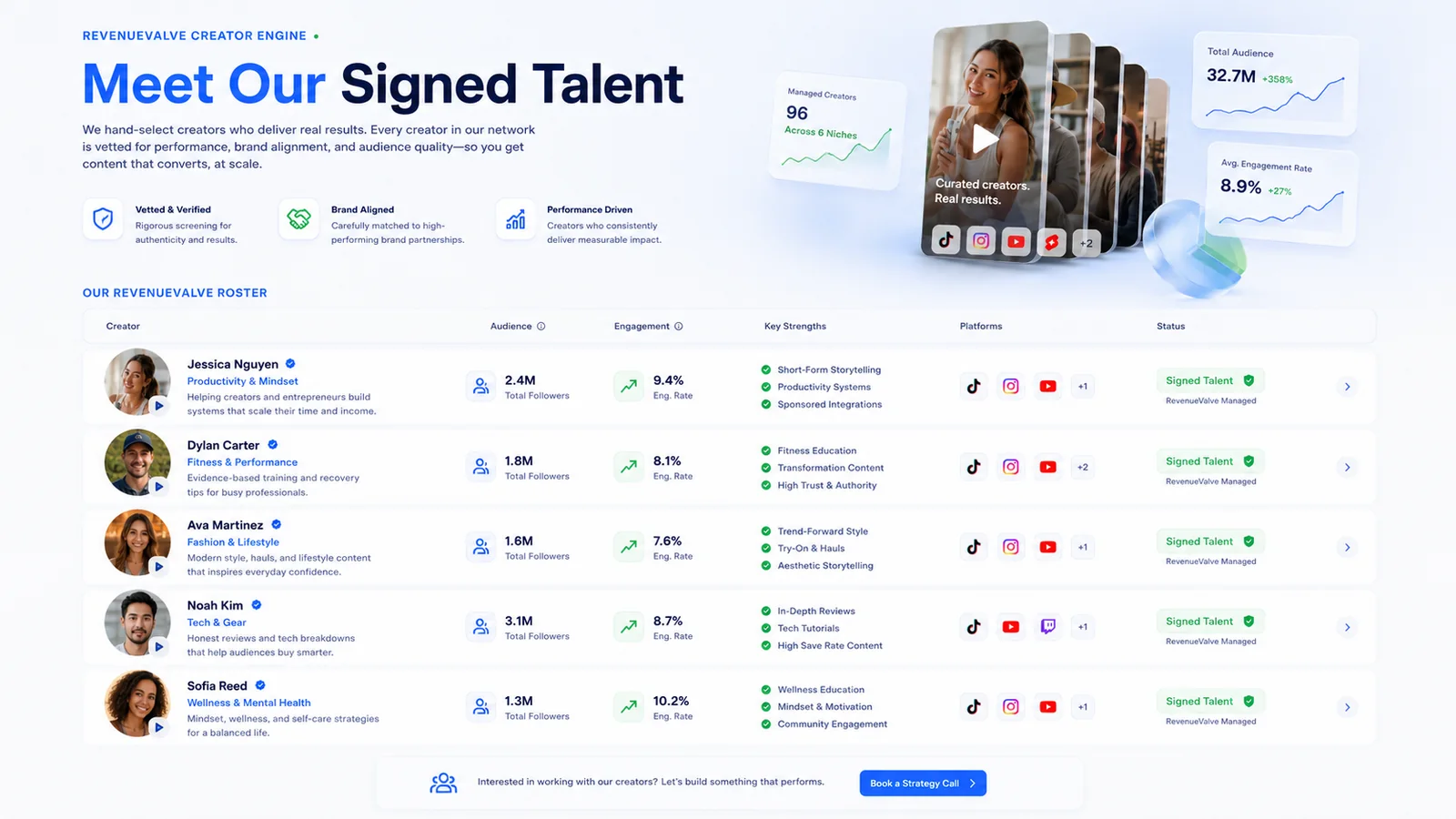
Open creator marketplaces and managed rosters solve different problems. A marketplace provides access and search. A managed roster provides selection, accountability, coordination, and ongoing development. Brands should choose the model based on campaign complexity, internal resources, risk, and the level of creative support required.
What each model is designed to do
Open marketplace
An open marketplace gives brands a large searchable pool, profiles, pricing or proposals, and a transaction workflow. It can be efficient when the scope is simple, the brand has strong internal creative direction, and the team is prepared to review many candidates.
Managed roster
A managed roster is selective. The agency or management team knows the creators, supports their development, coordinates campaigns, and remains accountable after selection. The brand is not only buying access to profiles. It is buying an operating layer.
Neither model is automatically better. The wrong model creates friction. A brand that needs one simple unboxing may not require full management. A regulated, multi-creator campaign with paid usage, multiple approvals, and a tight launch date may be expensive to coordinate through independent transactions.
The operating differences that matter
| Area | Open marketplace | Managed roster |
|---|---|---|
| Sourcing | Large pool, brand filters and reviews | Curated recommendations based on known fit |
| Creative strategy | Often brand-led or sold as an add-on | Usually coordinated with the campaign |
| Communication | Brand manages multiple creator conversations | One management layer consolidates communication |
| Quality control | Depends on profile proof and buyer process | Built into creator development and campaign review |
| Brand safety | Brand performs review or relies on platform controls | Roster vetting plus campaign-specific review |
| Rights | Often standardized packages | Negotiated around the campaign and creator |
| Reporting | Platform and creator submissions | Consolidated campaign reporting and learning |
| Relationship | Frequently project-based | Designed for repeat and long-term growth |
Curation
Marketplace filters can narrow a large pool, but a managed team can interpret context that profiles do not show: how the creator handles feedback, whether their recent category shift is intentional, which formats are strongest, and whether the creator is prepared for a demanding production schedule.
Accountability
When a creator goes silent, a product shipment is delayed, or stakeholders disagree, the brand needs an owner. In a managed model, the agency can coordinate a solution, reset expectations, or recommend another path. The management fee pays partly for that accountability.
Creative development
Open marketplaces are good at matching supply and demand. They are not always designed to coach talent over time. A managed roster can identify recurring strengths, improve portfolios, develop content systems, and bring campaign learning back to the creator.
Brand safety and claims
Every campaign still requires specific review. A “vetted” badge cannot guarantee future behavior or replace claim approval. Management can, however, provide a documented review process, disclosure instructions, rights tracking, and an escalation route.
When an open marketplace is a practical choice
- The brand needs a high volume of simple assets.
- The product category has limited claim or safety risk.
- The internal team can write briefs and manage reviews.
- The campaign does not require deep creator relationships.
- Standardized usage packages fit the media plan.
- The team can evaluate portfolios and audience data independently.
A marketplace can also help with discovery. A brand may use it to identify emerging styles, regions, or categories, then move the strongest relationships into a more managed program.
When a managed roster creates more value
- The campaign includes several creators, formats, or launch dates.
- The content will be used in paid media and requires rights tracking.
- The category involves health, finance, minors, or sensitive claims.
- The brand needs creative strategy and production support.
- Stakeholder review must be consolidated.
- The goal is a long-term ambassador or recurring content engine.
- The internal team has limited time for creator operations.
Management is especially useful when the content must do more than appear on a creator’s account. A brand that needs raw footage, variations, partnership ads, website use, product photography, and monthly reporting benefits from one coordinated scope.
Compare total operating cost, not profile price
Marketplace pricing can look lower because internal labor is not shown. Add time for sourcing, interviews, contracts, product logistics, briefing, reviews, rights administration, payment, reporting, and replacements. Then compare the managed proposal.
The managed model should also be transparent. Brands should understand the creator compensation, management scope, pass-through costs, rights, and deliverables. “Full service” is not meaningful unless the responsibilities are written.
A hybrid model can combine reach and control
Some teams use open discovery for the top of the funnel and management for the working roster. The brand or agency reviews a broad market, runs small pilots, and moves proven creators into a preferred program with better briefs, repeat work, negotiated rights, and shared reporting.
This approach keeps discovery open while protecting campaign execution. Creators also benefit because strong performance leads to continuity instead of returning to a bidding process for every project.
A decision framework for brands
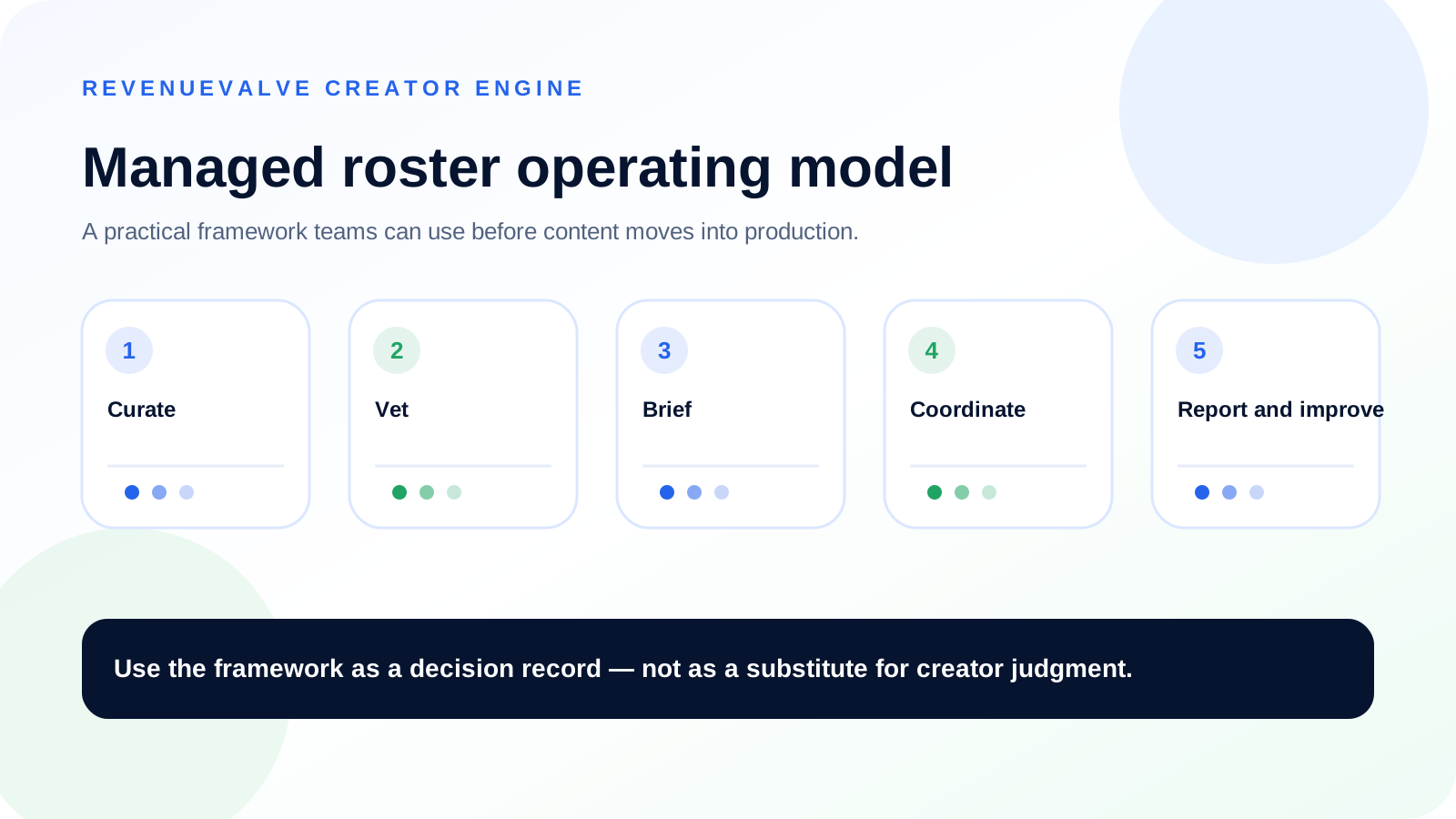
- Define complexity. Count creators, deliverables, channels, approvals, and rights.
- Assess internal capacity. Identify who will source, brief, review, pay, and report.
- Rate campaign risk. Review claims, category, audience, location, and brand reputation.
- Choose relationship length. One asset, seasonal program, or ongoing partnership.
- Compare total cost. Include internal labor and the value of coordination.
- Set accountability. Name the person responsible when something changes.
RevenueValve Creator Engine is built around the managed-roster model. The public profiles are not product listings. They represent creators RevenueValve can support through strategy, content development, campaign coordination, rights conversations, and reporting. That model is useful for brands that want talent access without taking on every operational detail themselves.