Sports creator marketing works because audiences are already following a journey: training, competition, recovery, identity, community, and progress. The opportunity is larger than a famous athlete holding a product. Coaches, tournament competitors, gym creators, team parents, commentators, and local sports personalities can all create credible campaign moments when the role is chosen carefully.
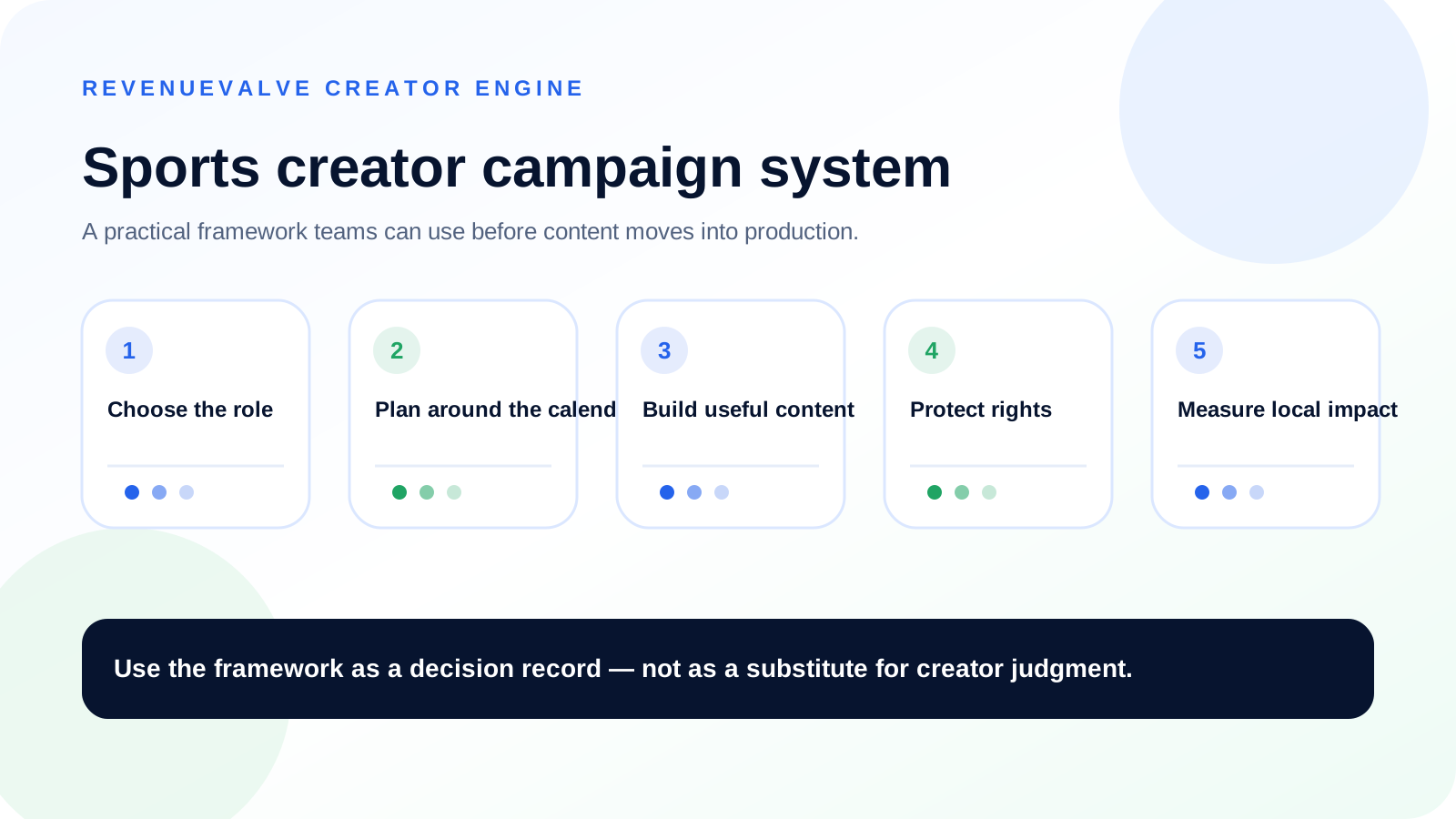
Choose the creator role before choosing the creator
The word “athlete” covers very different commercial strengths. A competitive athlete can provide authority and performance context. A coach may be stronger at education. A fitness creator may produce more consistent short-form content. A local tournament winner may have limited reach but deep relevance in a community the brand wants to reach.
Common sports creator roles
- Performance storyteller: Documents preparation, competition, setbacks, and improvement.
- Coach or educator: Explains technique, equipment, routines, and decision-making.
- Lifestyle athlete: Connects sport with food, travel, fashion, work, and family life.
- Community connector: Has credibility inside a city, school, gym, club, or tournament circuit.
- Product specialist: Reviews gear, technology, recovery tools, or training products in detail.
- Event correspondent: Creates interviews, behind-the-scenes coverage, and recap content.
Match the role to the message. A new technical product may need explanation from a coach. A local opening may benefit from a community connector. A recovery brand may want an athlete who can responsibly show how the product fits into an established routine without promising medical outcomes.
Plan around the sports calendar
Sports content has natural peaks and constraints. Competition weeks create urgency, but athletes may have less production time. Off-season periods provide room for deeper stories and product integration. Travel creates visual opportunity and logistical risk. Build the calendar with the creator instead of placing a generic marketing schedule on top of training.
| Period | Useful content | Planning note |
|---|---|---|
| Pre-season | Goals, equipment setup, routines | Good time for education and long-form stories |
| Training block | Progress, technique, day-in-the-life | Capture repeatable series and product proof |
| Competition week | Preparation, travel, quick updates | Keep deliverables light and approvals fast |
| Post-event | Recap, lessons, recovery | Use real emotion and avoid forcing a win narrative |
| Off-season | Skill work, lifestyle, community | Best window for larger production and brand storytelling |
Ask what cannot be filmed. Venues, leagues, schools, gyms, and event organizers may have media rules. Team uniforms, sponsor marks, music, athlete likenesses, and bystanders can create rights questions. A campaign should know the location policy before the production team arrives.
Campaign formats that fit sports audiences
Routine integration
Show the product inside a real preparation or recovery sequence. The product should have a clear role. A forced placement inside an unrelated workout is easy for the audience to recognize.
Technique with context
Education builds saves and repeat viewing. The creator can explain a decision, demonstrate a movement, compare options, or correct a common mistake. Brands should avoid turning educational content into unsupported performance claims.
Challenge or progression series
A multi-post series can document a measurable, safe goal over time. Define what is being measured, what the product contributes, and what factors remain outside the product’s control. The story becomes more believable when progress is not presented as effortless.
Event coverage
Creators can capture arrival, preparation, atmosphere, interviews, product use, and recap. Use a shot list, but leave room for unscripted moments. Event content benefits from a rapid editing workflow because relevance declines after the event passes.
Local activation
A smaller sports creator may be more valuable than a national personality when the campaign needs gym visits, tournament attendance, retail traffic, or community participation. Add trackable codes, location-specific landing pages, RSVP links, or in-store redemption to connect content with action.
Rights, safety, and disclosure
Confirm who owns the footage, where it may be used, how long the brand may use it, and whether paid advertising is included. Sports footage can contain additional protected material: event broadcasts, music, venue graphics, team marks, sponsor logos, and people who did not sign a release.
Commercial music deserves special attention. TikTok recommends using its Commercial Music Library for content that promotes a brand, product, or service. Music that is available for normal personal posting may not be licensed for commercial use.
Material relationships must be disclosed. Free equipment, paid travel, appearance fees, commissions, and product gifts can all affect how an audience evaluates the recommendation. Provide disclosure language in the brief and confirm the creator uses the platform’s commercial-content tools when required.
Health and performance claims
Sports campaigns often touch recovery, pain, sleep, supplements, nutrition, and physical performance. Objective claims should be reviewed by the brand’s qualified team and supported appropriately. Creators should describe their own experience without turning it into a guarantee for every viewer.
When minors appear, obtain appropriate permissions and limit personal information. A parent or guardian should understand the production, distribution, usage term, and paid-media plan. Local rules and sports organization policies may add requirements.
Measure more than views
Sports content can support awareness, authority, community action, and sales. Use metrics that reflect the job.
- Awareness: qualified reach, unique viewers, video starts, frequency
- Attention: average watch time, retention, completion, replay behavior
- Trust: saves, shares, substantive comments, direct questions
- Action: profile visits, landing-page sessions, code use, RSVPs, store visits
- Creative value: number of usable variants, paid-media efficiency, fatigue rate
- Relationship value: renewal potential, event access, audience continuity
Compare content against the creator’s normal baseline and against other campaign assets with similar distribution. A competition recap posted during a major event should not be treated as the baseline for an ordinary product tutorial.
How to compensate sports creators fairly
Separate production, posting, usage, and exclusivity. Production covers the work required to plan and create the content. Posting compensates access to the creator’s audience. Usage covers the brand’s right to reuse the asset. Exclusivity limits the creator’s ability to work with competing companies and should have a clear category and term.
Travel, entry fees, coaching time, venue rentals, equipment, assistants, and rush editing may be legitimate additional costs. A well-scoped agreement makes the partnership easier to renew because both sides understand where the budget went.
An eight-week campaign plan
- Week 1: Define objective, role, audience, event calendar, and rights needs.
- Week 2: Review creators, content history, availability, and location rules.
- Week 3: Select talent, finalize scope, product delivery, and safety review.
- Week 4: Approve concepts and capture pre-event or routine content.
- Week 5: Produce core assets and hook variations.
- Week 6: Publish or launch paid testing; monitor audience questions.
- Week 7: Produce follow-up content using real objections and comments.
- Week 8: Report results, archive rights, and decide what to renew.
The strongest sports partnerships feel connected to the creator’s actual season and identity. Brands gain credibility when they support the story already happening, give the creator a defined role, and build a professional system around production and measurement.
Sources and further reading
- FTC: Disclosures 101 for Social Media Influencers
- TikTok: Commercial use of music
- TikTok: Promoting a brand, product, or service
- YouTube: Paid promotions and sponsorships
This article offers general planning information. Rights, minors, health claims, and sports-organization rules should be reviewed for the specific campaign.